Public Health Evidence-Based Decision and Policy Making
Purpose
• The training offers an opportunity to strengthen capacity in the use of evidence to inform public health decision and policy making.
Aim
• Develop the knowledge, insight, and skills to formulate evidence-based public health policies and promote the use of evidence to inform public health decision and policy making
Objectives
• Improve understanding of public health policymaking processes and capacity to navigate the factors that influence public health policy decisions and the role of research evidence in public health policy decisions
• Enhance capacity in effective searching of literature for policy-relevant research
• Build skills in the use of evidence in public health policies with a focus on preparing policy briefs, policy memos, briefing notes, and rapid response services to inform public health policies
• Promote the uptake of evidence through different dissemination channels with a focus on deliberative dialogues to communicate findings with key stakeholders
• Strengthen capacity in evaluating the impact of public health policies and the effectiveness of activities conducted to promote the use of evidence in policymaking
• Offer a unique opportunity to promote an environment/culture supportive of evidence-informed policymaking within trainees’ organizations to respond to local and national level public health issues
The training targets:
• Policymakers and stakeholders who contribute to the development of public health policies, from the health sector and relevant sectors such as education, economics, environment, and agriculture sectors, etc.
• Public health professionals, policymakers and stakeholders working in national and local authorities and other public and private sector organizations
• Civil society groups and the general public involved in the development, dissemination, and/ or the implementation of public health policies.

بناء القدرات في مجال الاستجابة لطوارئ الصحة العامة في المنافذ
- تطوير المهارات الفنية: زيادة قدرات العاملين في المنافذ الصحية عن طريق التدريب على أحدث أساليب المراقبة الصحية.
- تعزيز المعرفة بالقوانين واللوائح: تقديم معلومات دقيقة حول القوانين والسياسات المتعلقة بالأمن الصحي والاستجابة للطوارئ.
- تحسين عمليات الاستجابة: تدريب المشاركين على كيفية التعامل مع حالات الطوارئ الصحية بفاعلية واتباع الإجراءات اللازمة.
- تعزيز التعاون بين الكوادر الصحية: تشجيع العمل الجماعي والتنسيق بين مختلف الجهات المعنية في المنافذ لتعزيز الأمن الصحي.
الفئة المستهدفة:
الكوادر الصحية العاملين بمراكز المراقبة الصحية بمنافذ الدخول.

SCPG
Saudi Clinical Preventive Guideline
The Saudi clinical preventive guideline is a comprehensive resource designed to provide family medicine and preventive medicine physicians with evidence-based recommendations for preventive care across all age groups.
This training program will aim to equip participants with the skills and knowledge necessary to accurately define the components of the guideline and to apply it in their clinical practice.
PHIMG
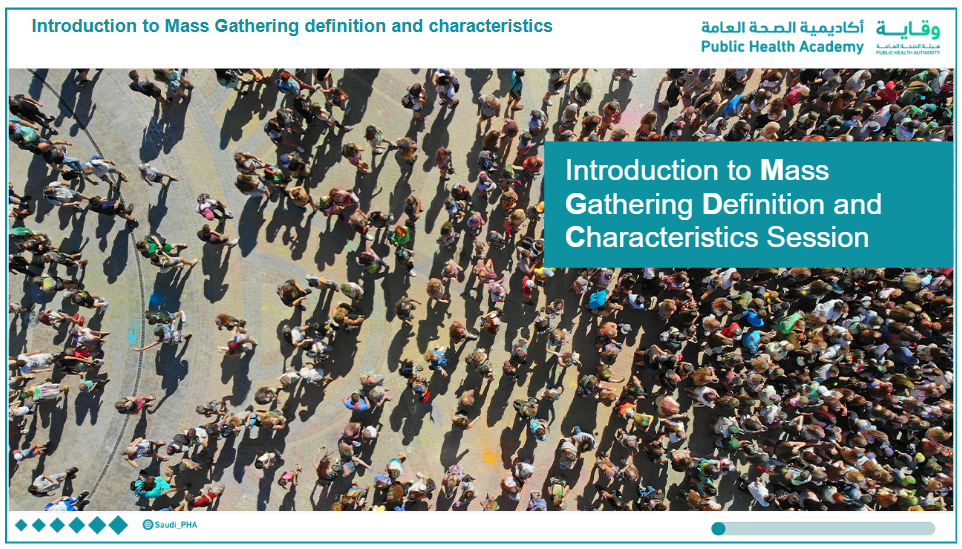
Public Health Interventions in Mass Gatherings
Public Health Management of Mass Gathering Events
Mass Gathering (MG) has been defined by the World Health Organization (WHO) as an occasion, either organized or spontaneous where the number of people attending is sufficient to strain the planning and response resources of the community, city, or nation hosting the event. Public health concerns which arise during such conditions include injury, communicable diseases, non-communicable diseases, exhaustion and heat-related illnesses among others. Public health workers aim to minimize these risks through gaining a better understanding of public health threats, strengthening of public health systems, and enabling of evidence-based decision-making. Furthermore, there is a demand to enhance preparedness, optimize surveillance, and develop rapid response capacities.
By the end of this session, the participants will be able to:
- Define mass gatherings and identify their unique characteristics and challenges on a global and regional level
- Identify the main public health concerns during mass gathering events
- Understand and apply the International Health Regulations (IHR) as they pertain to managing public health at mass gatherings.
- Describe the types and scope of mass gathering events in Saudi Arabia, particularly focusing on the Hajj and Umrah
- Conduct risk assessments for mass gatherings utilizing the right tools and prioritize needed health and safety interventions
- Identify the components of public health surveillance tailored to the specified needs and risks of different types of mass gathering events Grasp and apply various public health interventions specific for mass gathering
- Apply effective risk communication and community engagement strategies
- Implement environmental health and sanitation measures including addressing water safety, food hygiene, and waste management
- Collaborate effectively with various stakeholders, including healthcare providers, event organizers, and emergency services.
Professionals who have a role to plan and/or implement activities that aims to detect, prevent, and control public health events Mass Gatherings in Saudi Arabia. Preferable mid-level professionals and Rapid Responders
PHB 101
Public Health Basics Package
Public health basics package includes:
- Introduction to Public Health.
- Introduction to Epidemiology.
- Introduction to Biostatistics.
- Introduction into Clinical Research.
- Introduction to Report Writing.
- Introduction to Questionnaire formulating.
PHSSP
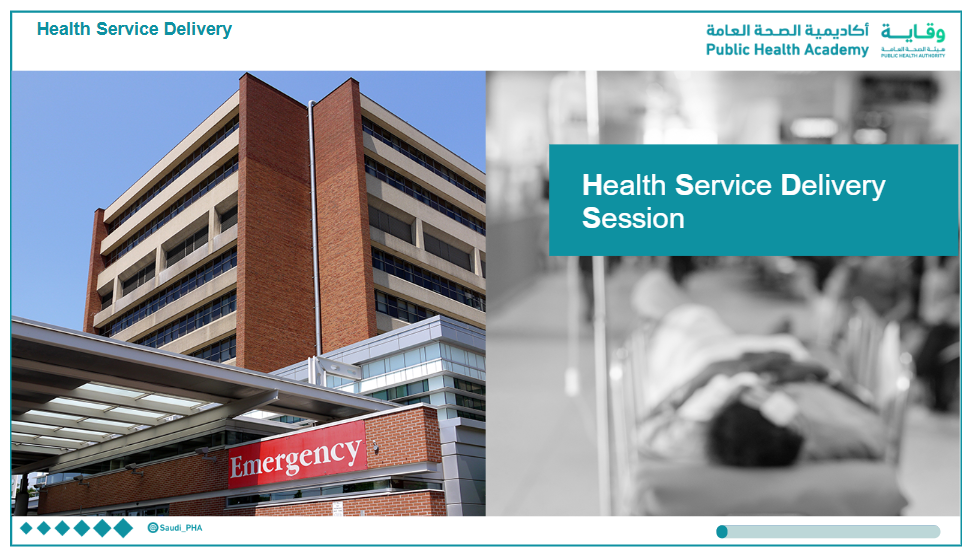
Public Health Support Skills Package
Public Health Support Skills Package
The Public Health Support Skills course is designed to empower participants with essential skills for effective leadership, management, and communication in public health settings. This comprehensive course integrates theoretical foundations, various leadership skills, and practical tools to support decision-making, program planning, resource management, and team development. By addressing key aspects such as health policy, stakeholder analysis, conflict resolution, and stress management, this course equips participants to navigate the complexities of public health systems and deliver impactful results.
Upon completion of this course, participants will be able to:
- Analyze health policies and adapt organizational strategies to improve service delivery.
- Apply organizational management theory in public health practice.
- Identify and apply various leadership styles and theories to influence and motivate teams in public health contexts.
- Develop and implement effective project management plans, ensuring optimal allocation and utilization of resources.
- Design evidence-based health programs that meet community needs and evaluate their effectiveness.
- Assess the roles and interests of stakeholders to foster collaboration and achieve program objectives.
- Implement change management strategies to enhance organizational performance and adaptability.
- Apply structured problem analysis techniques to identify challenges and craft actionable solutions.
- Foster a cohesive team environment and enhance interpersonal communication to achieve shared goals.
- Conduct self-assessments to identify personal strengths and areas for growth while resolving conflicts effectively.
11. Develop strategies to prioritize tasks, enhance productivity, and manage stress for personal and professional well-being.
· Public health leaders and managers,
· Public health practitioners.
AOI 101
Applied Outbreak Investigation
Welcome to the Applied Outbreak Investigation training! In this training, we will cover 11 steps to investigate a foodborne illness outbreak. In a real-life situation, these steps might happen in a different order, or steps may occur simultaneously. Participants will also work through an outbreak scenario using skills learned during each module.
Each outbreak step has:
● Module objectives
● Short videos covering the related concepts.
● Knowledge check questions
● A case study scenario
We recommend that you work through the case study as you complete each module. But if it is completed separately from the training, it should be completed in the chronological step order as the information builds upon itself.
Course
Objectives:
●
Define a foodborne outbreak.
●
Describe when a foodborne outbreak investigation is necessary.
●
Demonstrate how to investigate an outbreak.
●
Describe the roles and responsibilities of epidemiology, environmental
health, and laboratory in an outbreak investigation.
●
Identify available tools and resources.
●
Describe how to document and report on outbreak findings.
●
Identify communication strategies to employ during an outbreak.
الصحة العامة لغير المختصين
الغرض
تمكين غير المختصين من تكوين فهم أساسي وشامل لمجال الصحة العامة، ودوره في تحسين صحة المجتمع والوقاية من الأمراض، بما يعزّز الوعي الصحي ويساعد على استيعاب المفاهيم والمصطلحات المرتبطة به.
الهدف العام
أن يكون المتدرب قادراً على استيعاب مفهوم الصحة العامة، والتمييز بينها وبين الرعاية الصحية، وفهم أبرز المصطلحات المستخدمة في هذا المجال، والتعرّف على التخصصات المختلفة للصحة العامة بنهاية الدورة.
الأهداف التفصيلية
- التعرف على مفهوم الصحة العامة.
- التمييز بين الصحة العامة والرعاية الصحية.
- فهم أهم المصطلحات في مجال الصحة العامة.
- الإلمام بالتخصصات المختلفة في الصحة العامة.
الفئة المستهدفة
-
غير المختصين في المجال الصحي.
-
المهتمون بالتثقيف الصحي ورفع الوعي المجتمعي.
-
العاملون في القطاعات غير الصحية ذات العلاقة بالصحة العامة.
RMTTCC
Risk Management Tools and Techniques in Challenging Conditions
Risk Management Tools and Techniques in Challenging Conditions
Public health is impacted by a wide spectrum of physical, chemical, and biological hazards. People's health and lives become at risk when they interact with people and health system vulnerability factors. In order to minimize those risks, robust risk reduction measures need to be taken. However, risk reduction cannot be achieved without understanding the causes and influencing factors. Hence, risk assessment, including risk determinants, is crucial for any risk management plans and projects. This course provides field-oriented, locally adapted training that presents suitable tools and techniques to conduct risk assessments and develop risk management plans.
By the end of this session, the participants will be able to:
- Discuss the common public health risks in the region and globally
- Conduct effective risk assessments to determine potential impacts.
- Understand the process and approaches of hazard, vulnerability, and capacity assessment
- Utilize a range of tools and frameworks to manage risks effectively in uncertain environments.
- Demonstrate the development of risk reduction plans
- Develop and prioritize actionable strategies to reduce or control risks.
- Discuss the cost of risk management options.
- Communicate risk information clearly and effectively to various stakeholders.
- Effectively handle data in the acute phase of emergencies from collection to dissemination.
All public health professionals who are involved in assessing, planning, and implementing risk management interventions. The audience are those who execute the risk management functions as well as the manager of public health emergencies.

PHIE
Public Health Interventions in Emergencies
Public Health Interventions in Emergencies
Public health interventions differ greatly depending on the nature, scope and type of disaster, the availability of resources, and the social, political and economic characteristics of each affected community. Knowing common interventions and when to use them is critical for decision makers, public health professionals, humanitarian workers and disaster managers. This course follows the international guidelines and standards that are modified to meet the regional context and local characteristics of the Kingdom of Saudi Arabia. A large portion of this course will focus on surveillance, outbreak investigation and other cost-effective interventions with special approaches, techniques and tools that are adapted to suit emergency situations. This course integrates adult learning principles by incorporating case studies, real-life examples, questions, and interactive sessions wherever feasible.
By the end of this session, the participants will be able to:
- Identify the emergencies that face countries, particularly the Kingdom of Saudi Arabia.
- Identify the public health risks and consequences associated with emergencies
- Identify cost-effective interventions in responding to public health emergencies
- Understand the role of epidemiology in emergency management.
- Understand the type, structure and function of surveillance systems during emergencies.
- Conduct outbreak investigation in emergency situations.
- Conduct health needs assessments.
- Understand risk management
- Describe the key components of essential health services in emergencies and prioritize interventions to ensure accessible and continuous care for vulnerable populations.
- Make plans to keep primary and secondary care levels and referral services functioning during emergencies.
- Understand the logistics requirements of medical and humanitarian aid provision during emergencies.
- Explain the importance of Health Information Systems and their components.
- Identify essential WASH needs in emergency settings and outline effective interventions to prevent waterborne diseases and promote hygiene among affected populations.
- Explain the importance of mental health and psychosocial support in emergencies and identify appropriate interventions to address the psychological needs of affected individuals.
- Assess the impact of emergencies on food security and design basic nutrition programs to address malnutrition in affected communities.
- Develop effective health messages and utilize diverse communication channels to inform and educate affected populations on health risks and protective actions during emergencies.
Front Line Public Health Practitioners

Descriptive Analytics in Public Health Using R
Course Title:
"Descriptive Analytics in Public Health Using R"
Course Description:
This course is designed to equip students with the skills to apply descriptive analytics in the field of public health using the R programming language. The focus is on leveraging R's powerful tools for data manipulation, visualization, and analysis to make informed decisions in public health contexts.
Key Modules:
1. Introduction to R for Public Health: Familiarize with the R environment, basic syntax, and data structures. Understand the relevance of R in public health data analysis.
2. Data Management in R: Learn how to import, clean, and manipulate public health data using R. This includes dealing with various data formats and managing large datasets.
3. Descriptive Analytics Fundamentals: Understand the principles of descriptive analytics. Focus on summarizing and describing public health data to identify patterns, trends, and relationships.
4. Visualization Techniques in R: Master the art of visualizing public health data using R's ggplot2 and other visualization packages. Learn how to communicate data findings effectively through graphs and charts.
5. Case Studies in Public Health: Apply the learned concepts in real-world public health scenarios. Analyze datasets to identify health trends, assess population health needs, and support public health policies.
Learning Outcomes:
By the end of this course, students will be proficient in using R for descriptive analytics in public health. They can effectively manage, analyze, and visualize public health data, providing actionable insights for healthcare decision-making. This course structure ensures a comprehensive understanding of both the technical aspects of R programming and the practical application of descriptive analytics in public health.

Introduction to Public Health Laboratories (PHLs)
Course Description:
This course provides a comprehensive introduction to public health laboratories, highlighting their foundational components, operational systems, and critical contributions to public health. It is designed for new public health laboratory professionals, students, and anyone seeking a comprehensive understanding of public health laboratories.
Participants will gain insights into the historical evolution, core functions, and specialized roles of public health laboratories, including their impact on disease prevention, outbreak response, and policy development.
Course Objectives:
By the end of this course, participants will be able to:
- Understand the core components and systems of public health laboratories:
- Identify the multifaceted roles of public health laboratories:
- Analyze the importance of partnerships and collaboration:
- Examine advanced diagnostic technologies and data management processes:
- Understand the laboratory's role in global health security and emergency preparedness:
- Recognize ethical considerations in public health laboratory practices